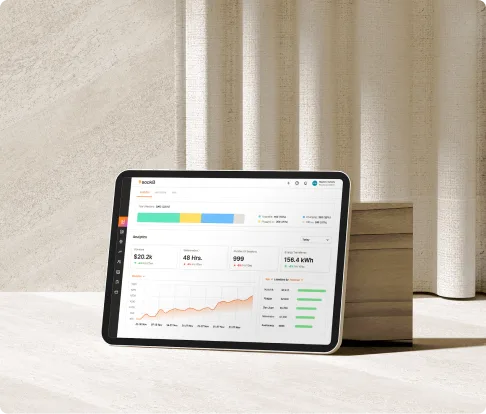
White-Label EV Charging Software for CPOs: CSMS, Apps, Payments and Hosting

White-label EV charging software gives a charge point operator a branded driver experience without requiring the operator to build the charging backend from scratch. The useful comparison is not the logo screen. It is whether the CSMS, apps, payments, hardware and hosting form one supportable operating system.
A new CPO often needs to launch quickly while retaining its own customer relationship. That requires more than colours and a custom domain. The operator still needs reliable charger communication, visible sessions, tariff rules, payment reconciliation, customer access, support evidence and clear ownership when an integration fails.
Start with the operator control plane
The CSMS should let the operations team see charger and connector state, follow sessions, manage tariffs and access, run authorised remote commands and investigate protocol messages. Ask the vendor to demonstrate these workflows with the charger models and firmware planned for launch. OCPP compatibility is a boundary to validate, not a guarantee that every device behaves identically.
Define the branded driver journey
List the journeys drivers must complete: locate a charger, understand price, authenticate, start, observe and stop a session, pay, receive a record and obtain support. Decide whether a branded web app is sufficient or native iOS and Android apps are required. App-store accounts, release approvals, notifications, maps and ongoing updates should be explicit parts of the scope rather than assumptions.
Connect local payments to charging evidence
Local payment support depends on the gateway APIs, webhooks, merchant account and market rules. During acceptance, trace the amount shown to the driver through authorisation, the measured session, the final charge and the finance record. Include failed starts, interrupted sessions and refunds where they belong in the operator's process. The gateway and CSMS must have an agreed source of truth for each state.
Choose hosting by responsibility, not by label
Managed cloud can reduce the infrastructure work required for launch. Customer-hosted deployment can provide more control, but the operator then needs named owners for cloud accounts, networking, monitoring, backups, recovery, upgrades and access. Ask who responds to an alert, who can deploy a fix and how changes are tested before production.
A practical acceptance checklist
Brand and ownershipConfirm domain, visual identity, app publisher, support details, customer relationship and data responsibilities.
HardwareTest representative charger models, firmware, security and the required charging and recovery flows.
PaymentsValidate successful, failed, interrupted and corrected outcomes against session and gateway records.
OperationsExercise remote controls, roles, reports, alerts, exports and the support escalation path.
DeploymentDocument infrastructure, release, backup, recovery and ongoing maintenance ownership.
Sock8 has used this model for a new operator in Moldova: a white-label CSMS and customer app, hosted in the operator's AWS environment, integrated with a local payment gateway and now used to operate more than 150 chargers. The relevant lesson is the combination of branding, infrastructure, payments and day-to-day controls, not the market name alone.